Download The Great Deformation: The Corruption of Capitalism in America, by David A. Stockman
So, just be below, discover guide The Great Deformation: The Corruption Of Capitalism In America, By David A. Stockman now as well as check out that swiftly. Be the very first to read this e-book The Great Deformation: The Corruption Of Capitalism In America, By David A. Stockman by downloading in the web link. We have other e-books to check out in this site. So, you could find them also conveniently. Well, now we have actually done to provide you the ideal publication to check out today, this The Great Deformation: The Corruption Of Capitalism In America, By David A. Stockman is really suitable for you. Never ever neglect that you need this e-book The Great Deformation: The Corruption Of Capitalism In America, By David A. Stockman to make better life. On-line e-book The Great Deformation: The Corruption Of Capitalism In America, By David A. Stockman will actually provide easy of every little thing to read and also take the advantages.
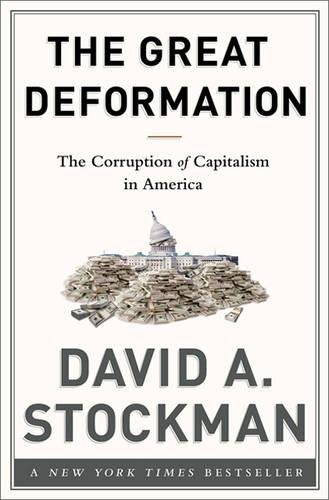
The Great Deformation: The Corruption of Capitalism in America, by David A. Stockman

Download The Great Deformation: The Corruption of Capitalism in America, by David A. Stockman
The Great Deformation: The Corruption Of Capitalism In America, By David A. Stockman As a matter of fact, publication is actually a window to the world. Even many people may not such as reading publications; guides will certainly consistently provide the precise details about truth, fiction, encounter, journey, politic, religious beliefs, and more. We are here a site that provides compilations of publications more than guide establishment. Why? We offer you lots of varieties of link to get guide The Great Deformation: The Corruption Of Capitalism In America, By David A. Stockman On is as you need this The Great Deformation: The Corruption Of Capitalism In America, By David A. Stockman You could discover this publication quickly here.
This The Great Deformation: The Corruption Of Capitalism In America, By David A. Stockman is extremely proper for you as newbie visitor. The viewers will consistently begin their reading practice with the favourite motif. They might not consider the author and also publisher that produce the book. This is why, this book The Great Deformation: The Corruption Of Capitalism In America, By David A. Stockman is actually ideal to check out. However, the principle that is given in this book The Great Deformation: The Corruption Of Capitalism In America, By David A. Stockman will reveal you lots of points. You could start to love likewise reviewing till completion of the book The Great Deformation: The Corruption Of Capitalism In America, By David A. Stockman.
In addition, we will certainly share you the book The Great Deformation: The Corruption Of Capitalism In America, By David A. Stockman in soft file kinds. It will not disrupt you to make heavy of you bag. You require only computer system gadget or gadget. The web link that we offer in this website is offered to click and after that download this The Great Deformation: The Corruption Of Capitalism In America, By David A. Stockman You understand, having soft documents of a book The Great Deformation: The Corruption Of Capitalism In America, By David A. Stockman to be in your tool could make relieve the readers. So this way, be a good user currently!
Simply link to the net to get this book The Great Deformation: The Corruption Of Capitalism In America, By David A. Stockman This is why we suggest you to utilize and also use the established modern technology. Reviewing book doesn't indicate to bring the published The Great Deformation: The Corruption Of Capitalism In America, By David A. Stockman Developed technology has actually enabled you to review only the soft data of the book The Great Deformation: The Corruption Of Capitalism In America, By David A. Stockman It is exact same. You may not should go and get traditionally in searching the book The Great Deformation: The Corruption Of Capitalism In America, By David A. Stockman You may not have sufficient time to invest, may you? This is why we provide you the best way to get guide The Great Deformation: The Corruption Of Capitalism In America, By David A. Stockman currently!
A New York Times bestseller
The Great Deformation is a searing look at Washington's craven response to the recent myriad of financial crises and fiscal cliffs. It counters conventional wisdom with an eighty-year revisionist history of how the American state—especially the Federal Reserve—has fallen prey to the politics of crony capitalism and the ideologies of fiscal stimulus, monetary central planning, and financial bailouts. These forces have left the public sector teetering on the edge of political dysfunction and fiscal collapse and have caused America's private enterprise foundation to morph into a speculative casino that swindles the masses and enriches the few.
Defying right- and left-wing boxes, David Stockman provides a catalogue of corrupters and defenders of sound money, fiscal rectitude, and free markets. The former includes Franklin Roosevelt, who fathered crony capitalism; Richard Nixon, who destroyed national financial discipline and the Bretton Woods gold-backed dollar; Fed chairmen Greenspan and Bernanke, who fostered our present scourge of bubble finance and addiction to debt and speculation; George W. Bush, who repudiated fiscal rectitude and ballooned the warfare state via senseless wars; and Barack Obama, who revived failed Keynesian “borrow and spend” policies that have driven the national debt to perilous heights. By contrast, the book also traces a parade of statesmen who championed balanced budgets and financial market discipline including Carter Glass, Harry Truman, Dwight Eisenhower, Bill Simon, Paul Volcker, Bill Clinton, and Sheila Bair.
Stockman's analysis skewers Keynesian spenders and GOP tax-cutters alike, showing how they converged to bloat the welfare state, perpetuate the military-industrial complex, and deplete the revenue base—even as the Fed's massive money printing allowed politicians to enjoy “deficits without tears.” But these policies have also fueled new financial bubbles and favored Wall Street with cheap money and rigged stock and bond markets, while crushing Main Street savers and punishing family budgets with soaring food and energy costs. The Great Deformation explains how we got here and why these warped, crony capitalist policies are an epochal threat to free market prosperity and American political democracy.
- Sales Rank: #217869 in Books
- Brand: Brand: Public Affairs
- Published on: 2013-04-02
- Released on: 2013-04-02
- Ingredients: Example Ingredients
- Original language: English
- Number of items: 1
- Dimensions: 9.75" h x 6.50" w x 2.25" l, 2.35 pounds
- Binding: Hardcover
- 768 pages
From Booklist
Stockman, veteran of the Reagan White House and Wall Street, offers his self-described polemic, a wide-ranging indictment of the American government-economic complex; free markets and democracy have been under long-term attack, and the author explains why we have myriad problems, perhaps intractable. He indicates the book “contains much original interpretation of financial and public policy events and trends of the last century, even a revisionist framework.” Stockman concludes his lengthy controversial argument with: “the cure . . . is to return to sound money and fiscal rectitude and to correct the great error initiated during the New Deal . . . . In pursuing humanitarian purposes the state cannot and need not attempt to manage the business cycle or goose the free market with stimulants for more growth and jobs; nor can it afford the universal entitlements of social insurance. Its job is to be a trustee for citizens left behind, maintaining a sturdy, fair and efficient safety net.” This thought-provoking book will contribute to important debates on these issues. --Mary Whaley
Review
“Stockman produces a persuasive and deeply relevant indictment of a system dangerously akilter…. What Stockman has written is a book that makes clear we are that future generation of the past, inheritors of all the wishful thinking, simple illogic and flawed compromises that produced the near-term benefits our parents and grandparents worried about but ultimately wanted. And now it's payback time.”
Steve Weinberg,USA Today “Stockman devotes some of the book to the past five years, joining multiple previous authors who have presented their nominations for the villains and heroes of the 2008 economic collapse. As a book critic and investigative reporter, I have absorbed a dozen of those previous books. Stockman's is my favorite because of his original research, the context he presents (starting with the economic depression of the 1930s), his former insider status, and his apparent political non-partisanship during the endeavor.”
David Weigel, Slate “I'd read this book 10 times before I read another possible presidential candidate's memoir of how his Real American Story schooled him in the Audacity of Hope. …a coherent vision of a World Without the Fed.”
Paul B. Farrell, Marketwatch
Kirkus Reviews “Stockman performs a real service when he debunks the myths that have been associated with Reagan's conservatism and promotes Eisenhower's fiscal and military conservatism…. Stockman forcefully conveys enormous amounts of knowledge.”
LewRockwell.com
“His rhetoric in a recent New York Times op-ed piece ignites like Seal Team Six coming at you, flash grenades exploding, assault weapons blazing. No wonder he triggers wild angry, hatred and revenge. Yes, he's a truth-teller. And truth hurts, flushing out his enemies. Why? They're sucking trillions from Americans. So you hate him. Counterattack. Big mistake. Don't dismiss David Stockman. He's no Kim Jong-Un blow-hard.”
Bruce Krasting “This is a history book. It's a detailed account of the key events since the Depression that have shaped modern finance. I love history, and I'm familiar with those events. Stockman's spin on financial history makes for a very good read. There's something for everyone.”
Reuters Breakingviews “For anyone whose economics are Austrian, and who agrees with Stockman that crony capitalism and corruption have led both fiscal and monetary policies into a cycle of ever-increasing stimulus and ziggurats of debt, ‘The Great Deformation' is gloomily persuasive – and bodes ill for the future.”
Townhall.com “Agree with Stockman or not, one can't deny that he's a colorful writer!”
Rick Santelli, CNBC “Squawk on the Street”
“In The Great Deformation, David Stockman – former US congressman and budget director under Ronald Reagan – tells the story of the recent crisis, and takes direct aim at the conventional wisdom that credits government policy and Ben Bernanke with rescuing Americans from another Great Depression. In this he has made a seminal contribution. But he does much more than this. He offers a sweeping, revisionist account of US economic history from the New Deal to the present. He refutes widely held myths about the Reagan years and the demise of the Soviet Union. He covers the growth and expansion of the warfare state. He shows precisely how the Fed enriches the powerful and shelters them from free markets. He demonstrates the flimsiness of the present so-called recovery. Above all, he shows that attempts to blame our economic problems on "capitalism" are preposterous, and reveal a complete lack of understanding of how the economy has been deformed over the past several decades…Thanks to The Great Deformation, not a shred of the regime's propaganda is left standing. This is truly the book we have been waiting for, and we owe David Stockman a great debt.”
Booklist “This thought-provoking book will contribute to important debates on these issues.”
Washington Post
About the Author
David A. Stockman was elected as a Michigan congressman in 1976 and joined the Reagan White House in 1981. Serving as budget director, he was one of the key architects of the Reagan Revolution plan to reduce taxes, cut spending, and shrink the role of government. He joined Salomon Brothers in 1985 and later became one of the early partners of the Blackstone Group. During nearly two decades at Blackstone and at a firm he founded, Stockman was a private equity investor. Stockman attended Michigan State University and Harvard Divinity School and then went to Washington as a congressional aide in 1970. He is also the author of the New York Times bestseller The Triumph of Politics: Why the Reagan Revolution Failed.
Most helpful customer reviews
289 of 303 people found the following review helpful.
A grim view of our future
By Drew Bruckner
David Stockman believes that our economy is almost past the point of no return. With a staggering federal debt and a deficit that keeps rising, he considers our economy to be a "setting sun" economy- our best days are behind us. But there's still hope, it's not too late to turn it around.
The book starts off with details on how, in the past, the banks leveraged capital and how their methods of investment were contingent on a constant upward spiral of success. He goes on to talk about how the fed propped Wall Street up with hopes of creating wealth through the stock market and that he believes they have overstepped their bounds. He criticizes Greenspan for his fiscal policies and compares that bubble to the one we are in today. Most of the book talks about the past and how we can relate it to the present and what we can learn from the mistakes made by our predecessors.
The facts and statistics he presents show that the "too big to fail" ideology adopted by the government was incorrect and in fact, many of the companies that received bailouts had sufficient assets to fend for themselves. Using AIG as an example, he outlines the overall sector's strengths and weakness during the crash of 2008. He asserts that during times of financial crisis, such as the crash of 2000, companies would inaccurately portray sales in order to make their company appear more valuable.
Highly critical of the Fed, many of his opinions are based around failures of the federal government to correctly manage the economy. Most of the time, he believes that their attempts to bolster the economy stem from pressure from business, rich people, or other government entities. He takes the reader through all of the United States' bubbles since before the Great Depression and explains the causes of each one. According to his statistics, most of the bubbles were caused by the Fed unnecessarily pumping money into the economy. He talks about the $800 billion stimulus and the minimal impact that it has had. He believes Bernanke and Obama are merely buying borrowed time with borrowed money.
The most interesting parts are when he quotes grim situations which highlight the depth of corruption in the government and big banks. In one instance, during the financial crisis of 2008, the Chairperson of the FDIC was "rarely consulted" and when she was, she was commanded: "you have to do this or the system will go down." There was "no analysis, no meaningful discussion." She expressed her frustration and explained that it became commonplace for her to be forced to carry out orders without being told the reasons or the end goals behind those orders. Generally, the government was unable to give reasons because they were acting on the whim of large banks. In another story, a head government official recounts the CEO of Goldman Sachs coercing him into providing the banks with bailout, lest their be dire consequences. The book has many shocking stories such as these. Each uncovers a different piece of corruption that, when added up, reveals a frightening picture of our government today.
Pros:
It was VERY detailed. There were countless facts and statistics to support his arguments and viewpoints.
It provided a good snapshot into the inner workings of politics and government monetary policy.
He provided factual stories and quotes throughout the book.
He focused on many of the large power-players in our economy and their roles in the financial crashes.
Cons:
The book tended to jump from time period to time period. One moment it's about the Great Depression, and the next, it's current. It can make it difficult to follow at times. It also makes it difficult to review.
It can be repetitive. Many of the things are said more than once or they are just reworded.
It's a bit dry. Even with the stories and shocking data, I still found it hard to concentrate.
12 of 12 people found the following review helpful.
This is the best economics book I've ever read. Indeed, it may be the best and most influential book I've ever read in my life
By Tim Knight
This is going to be a review of David Stockman's 768-page tome The Great Deformation, and 0831-deform
although I never thought it was possible, it makes me angry to write this book review.
I'm not angry because I don't like the book. On the contrary, this is the best economics book I've ever read. Indeed, it may be the best and most influential book I've ever read in my life. I only wish I had read it the moment it was published in April 2013. I only finished reading it today, and for the entire time I've been plowing through it, I've been trying to think of what I would say in this review.
Why am I angry, then, to write this? Bluntly stated, because nothing I can say will make what I want a reality. And what I want is for every literate person in the United States to read this book, cover to cover. I want them to read it. I want them to understand it. I want them to agitate for the changes that it recommends.
But I know at the outset that none of that is going to happen. The vast majority (I'll pull a number out of the air and declare it as 90%) are too lazy, dim-witted, or apathetic to bother. And that 90%, I daresay, is a kind estimate. I would also wager that another 1% - - and that would be the fabled 1% which enjoy a storied existence at the top of the socioeconomic heap - - would be wholly irrational to embrace any of the core shifts that the book recommends. These elites, after all, are the beneficiaries of the madness elucidated therein.
Reagan's Stockman
0831-stockmanLet's back up. As those of you born before 1970 hopefully recall, David Stockman became nationally famous when, still in his mid-30s, he was made the budget director of the newly-elected Reagan White House. Stockman was front and center in national news for years, and I clearly remember, even as a young teenager, reading about Stockman and the battles he was waging to invoke the so-called Reaganomics. My general impression from that time was that he was smart, capable, and committed. Then, as of the mid-1980s, just like most of the rest of the nation, I stopped hearing about him.
I consider myself well-read, and I have the luxury of time to stay abreast of most financial and economic news. In spite of this, if you had asked me several months ago what had ever happened to David Stockman, I would have had absolutely no idea. I daresay most of you are in the same boat, so in brief, I'll bring you up to speed:
After leaving the Reagan administration, Stockman joined Salomon Brothers and later was one of the earliest partners of the Blackstone Group. Years later, he went on to found his own private equity firm, Heartland Industrial Partners, for which he initially raised well over a billion dollars.
Heartland executed over twenty deals, one of which - Collins & Aikman - filed for bankruptcy. Stockman served as CEO at Collins, and early in 2007, he became the target of federal prosecutors in Manhattan as well as the SEC. From the little I've read about this period, the charges were completely ludicrous, and after wrecking nearly two years of Stockman's life (as well as those of many others), the prosecutors dropped the entire fleet of charges well before a trial could even commence.
From what I can gather, Stockman's mounting of his defense during the period of his prosecution his come-to-Jesus moment, since it dawned on him the nature of the business game he had been playing for so many years. Specifically, the hazards of the debt-saturated private equity world and, much more broadly, the entire globe that had become utterly besotted by debt. Stockman writes:
At length, I saw the light, and it had nothing to do with Paulson's apparent illiteracy on the precepts of sound fiscal policy. The bailouts, the Fed's frenzied money printing, the embrace of primitive Keynesian tax stimulus by a Republican White House amounted to something terrible: a de facto coup d'etat by Wall Street, resulting in Washington's embrace of any expedient necessary to keep the financial bubble going - and no matter how offensive it was to every historic principle of free markets, sound money, and fiscal rectitude.
Stockman thus endeavored to put together this book that is fervent, passionate, articulate, and remarkable in scope. And I kept wondering to myself, if the villains in the book (Paulson, Bernanke, Obama, the corpse of Richard Nixon, Larry Summers, Yellen, etc.) actually read it, would they think to themselves (A) "Oh my God, what have I done?????" or (B) "Crap, they're on to us."
Notable Quotes
My copy of the book is highlighted as heavily as the Bible of a Southern Baptist preacher, so it's hard for me to "boil down" the book to anything less than a fifty page review. I will just share a few morsels that I think help capture some of the points Mr. Stockman wants to make and the elegant fashion in which he presents them:
"This was a blatant miscarriage of governance. As will be seen, at that late stage of the delirious financial bubble which had overtaken America, Goldman Sachs and Morgan Stanley had essentially become economic predators. Their bankruptcy would have resulted in no measurable harm to the Main Street economy, and possibly some gain. It would have also brought the curtains down on a generation of Wall Street speculators, and sent them packing in disgrace and amid massive personal losses - the only possible way to end the current repugnant regime of crony capitalist domination of the nation's central bank." (p. 22)
"In a healthy capitalist economy, income distribution reflects the economic justice of the marketplace, not the political engineering of the state, and properly so." (p. 68)
"Policy measures like Fannie Mae, deposit insurance, social insurance, the Wagner Act, the farm programs, and monetary activism share a common disability: They fail to recognize that the state bears an inherent flaw that dwarfs the imperfections purported to afflict the free market; namely, that policies undertaken in the name of the public good inexorably become captured by special interests and crony capitalists who appropriate resources from society's commons for their own private ends." (p. 169)
"The Thomas Amendment was a nascent version of today's delusion that economic setbacks, shortfalls, and disappointments are caused by too little money. The true cause, both in the early 1930s and today, was actually an excess of debt. This explanation is never appealing to politicians because there is no real cure for the liquidation of excess debt, except the passage of time and the forfeiture of the ill-gotten gains from the financial bubbles preceding it." (p. 183)
It was around this time that I realized even sharing the very best of the best quotes, there would just be far too many, so I jumped toward the end of the book......
"The social insurance system is now entering an era of permanent funding crisis and chronic political turmoil. And, as detailed in chapter 32, the Bernanke stock market bubble is heading for a thundering meltdown which will vastly eclipse that of September 2008. So what lies ahead is endemic fiscal crisis, wrenching financial market dislocations, and relentlessly rising fear about financial security on Main Street." (p. 648)
"Only a financial system addicted to and whipsawed by central bank money printing can produce such erratic, capricious, and correlated results. What is implicated here is not the doings of the free market but the corruption of free money. For that reason, the Greenspan axiom that financial bubbles can't be prevented but only punctured and then bailed out afterward is downright perverse. Now in its third iteration, this policy is, in fact, the backstage mechanism by which society's income and wealth are being redistributed to the top 1 percent." (p. 656)
"While this is seemingly ironic given that Obama was reelected essentially on a platform of "fairness" for the middle class, that was content-free campaign rhetoric. The true irony is that political progressives are so indentured to Keynesian theories of demand stimulus that they have eagerly turned the nation's central bank over to Wall Street lock, stock, and barrel." (p. 657)
"The cruel corollary is that free market capitalism cannot help, either. It has been abused, burdened, demoralized, and impaired by decades of central bank money printing and the speculative raids and rent-seeking deformations which it fosters. Now the White House has a vague mandate that the 1 percent should pay more, but it's too late. The coming crash will leave a lot less to tax." (p. 671)
The Rogue's Gallery
There are some definite "bad guys" (and bad events) skewered in these nearly 800 pages. The names are all known to you, but the deeds, and their details, are articulated in ways I didn't understand well until now. These misfits include:
+ Richard "Tricky Dick" Nixon;
+ FDR (particularly his debasing of the dollar and confiscation of gold);0831-fatpig
+ Alan Greenspan's LTCM bailout in 1998;
+ Alan Greenspan's panicked, rate-plunging response to the Internet bubble collapse;
+ Alan Greenspan's deliberate inflation of the housing bubble (sense a trend here?);
+ Larry Summers, pictured here;
+ The military-industrial complex, wholly and utterly bloated beyond need;
+ Medicare/Medicaid/Obamacare and the breathtaking price inflation in the medical racket;
+ The "timorous" math professor Benjamin Bernanke;
+ The GM bailout, TARP package, and smorgasbord of "relief" programs in late 2008/early 2009
+ And, of course, President Obama
There are a few heroes mentioned in these pages, such as Fed chairman William McChesney Martin, Paul Volcker, Eisenhower, and Herbert Hoover (the last most particularly for the well-meaning, but aborted, efforts Hoover invoked to aid the nation as it entered Depression, only to be nefariously thwarted by a breathtakingly cynical FDR).
The Gospel?
Is this book absolutely perfect? Of course not. There are a smattering of typos and misspellings here and there, as one might expect of any book so large that could be used as a weapon of self-defense. It also is peppered with some phrases and expressions that get a bit overused or could be replaced with simpler language (for instance, "it cannot be gainsaid" could just as easily, and more clearly, be expressed by the word "undeniable.")
It's also on the long side, and it needn't be quite so lengthy. I personally found a few of the chapters, particularly those oriented toward leveraged buyouts and private equity, to not add much to the polemic. Stockman knows these topics so deeply, it was probably tempting to spend extra time espousing them, not unlike the way I prattled on in my own recent book about the Silicon Valley's Internet bubble.
But these trifles shave a hundredth of a point off the 100.00 score I would otherwise give the book. It is written with such clarity, fervor, and well-intentioned intellect that, even forty pages into it, I could hardly wait to climb go my rooftop to tell the world to go buy it. Mr. Stockman's days at the Harvard Divinity School have eased their way into the pages, because the prose has reads like the fiery gospel of a true believer.
It goes without saying that these ideas and arguments are not the scribblings of a lunatic standing on the soapbox in Central Park. Stockman occupied the highest levels of government and finance for his entire working life, and he is a wealthy, famous, and well-connected man who could easily, along with the rest of his 1% brethren, rest comfortably on his laurels for the rest of his days. He chose instead to bring to the truth - - the bare, detailed, and important-to-understand truth - - to the rest of us.
What Needs to Be Done
The final chapter of Great Deformation is the powerful money-shot to the entire tome, but the potency is instantly and honestly neutered by the reality - which Stockman proclaims at the outset - that none of the stated cures will see the light of day. In a word, it's simply too late, and only after a wrenching, worldwide financial cataclysm (that will make 2008 look like a gentle stroll with a lovely lass on a sunlit day) will humanity have the opportunity to get it right.
The last real opportunity to set things straight was presented - as Stockman writes - "on a silver platter" - but Washington doesn't have an iota of the political will that would have been required to seize that opportunity. The America today, and particularly the 1%, are far too fat, happy, and accustomed to the easy way out to undergo such a thing.
Having said that, even though it will break your heart (or should break your heart) to read what has happened, what probably will happen, and what might have been, you owe it to yourself to read this book. America is too flabby to buck up and face reality, but you as an individual should at least take it upon yourself to understand better than 99% of your compatriots how we got here and what road lies ahead. Thank you, Mr. Stockman.
8 of 8 people found the following review helpful.
Disturbing book on the US and world economies.
By John E. Pombrio
I put David Stockman's book The Great Deformation as the most complete book about the history of how the US economy has been run for the past 100 years. As I read the first section, I laughed at the vitriol coming from the author and how he took great exception to TARP and the bailout. His views were so DIFFERENT than anyone else. Did I believe it? No, not in the least. But he just kept hammering away with very inconvenient facts that I started to wonder. By the end of the first section, everything he wrote fit together and convinced me. It was a complete 180 for my views and was a complete surprise, something that I would not have thought possible.
The other chapters were like lifting a veil for me on the US economy for the past 100 years. How the Great Depression was not about the money supply, how President Eisenhower was an economic hero, the damage that FDR, Nixon, and Reagan did while in office, and the dismal failure by the Federal Reserve to avoid meddling in the US economy. I never heard of any of this! Was it true? Mr. Stockman just kept layering fact upon fact, how his ideas of what really happened fit too well with the results that came later.
I have read a couple of dozen books about the US economy (including Mr. Bernanke's book) about why 2008 happened and other topics about the national debt rise, etc. They all seemed to limit their scope to one or two facts or people, housing bubble, Credit Default Swaps, Bush, excessive leveraged debt. But what caused the 2000, 2007, 2013 stock bubbles? Why did stagflation occur and how did Mr. Volcker fix it? How did the national debt grow so big? How did China steal away US manufacturing? The Great Deformation answers ALL of these and so many more, it ties them all into a grand history of people, agencies, and institutions. No one person is to blame, no one political party, no one Fed chairman.
It is a LONG book, harder to read due to the anger evident on the pages. I think it was the anger that drove the book, and this is an important book. No other book could weave such a accurate look at US economic history without showing the injustice and heroism that occurred. It goes into economic details that are hard to follow for average readers. Finally, it is scary, could our greatest economists and political leaders really do this much damage?
Out of all the books on the US economy today, this IS THE ONE TO READ. It is worth the patience to wade through the book. None have the scope, none have the depth, and none have to willingness to tackle the rosy mists of myth that are what passes for history. I am a hardened skeptic and it convinced me.
The Great Deformation: The Corruption of Capitalism in America, by David A. Stockman PDF
The Great Deformation: The Corruption of Capitalism in America, by David A. Stockman EPub
The Great Deformation: The Corruption of Capitalism in America, by David A. Stockman Doc
The Great Deformation: The Corruption of Capitalism in America, by David A. Stockman iBooks
The Great Deformation: The Corruption of Capitalism in America, by David A. Stockman rtf
The Great Deformation: The Corruption of Capitalism in America, by David A. Stockman Mobipocket
The Great Deformation: The Corruption of Capitalism in America, by David A. Stockman Kindle

Tidak ada komentar:
Posting Komentar