Download Ebook The Frozen Hours: A Novel of the Korean War, by Jeff Shaara
Yeah, hanging around to read the e-book The Frozen Hours: A Novel Of The Korean War, By Jeff Shaara by online could additionally offer you favorable session. It will ease to talk in whatever problem. This means could be more intriguing to do and also easier to read. Now, to obtain this The Frozen Hours: A Novel Of The Korean War, By Jeff Shaara, you could download in the link that we give. It will certainly help you to get very easy way to download and install guide The Frozen Hours: A Novel Of The Korean War, By Jeff Shaara.
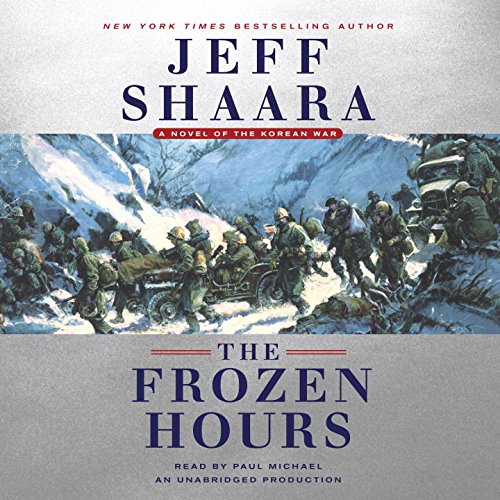
The Frozen Hours: A Novel of the Korean War, by Jeff Shaara

Download Ebook The Frozen Hours: A Novel of the Korean War, by Jeff Shaara
Reserve The Frozen Hours: A Novel Of The Korean War, By Jeff Shaara is one of the priceless well worth that will certainly make you consistently rich. It will not indicate as rich as the cash offer you. When some individuals have absence to deal with the life, individuals with numerous books often will certainly be better in doing the life. Why must be publication The Frozen Hours: A Novel Of The Korean War, By Jeff Shaara It is in fact not implied that e-book The Frozen Hours: A Novel Of The Korean War, By Jeff Shaara will provide you power to get to every little thing. Guide is to review and also what we meant is guide that is reviewed. You can likewise view just how guide qualifies The Frozen Hours: A Novel Of The Korean War, By Jeff Shaara and also numbers of publication collections are offering right here.
Do you ever understand the publication The Frozen Hours: A Novel Of The Korean War, By Jeff Shaara Yeah, this is a very intriguing e-book to read. As we informed formerly, reading is not type of responsibility activity to do when we have to obligate. Checking out must be a behavior, a good habit. By checking out The Frozen Hours: A Novel Of The Korean War, By Jeff Shaara, you can open up the brand-new world and also obtain the power from the globe. Everything can be obtained through the e-book The Frozen Hours: A Novel Of The Korean War, By Jeff Shaara Well briefly, book is really powerful. As what we provide you right here, this The Frozen Hours: A Novel Of The Korean War, By Jeff Shaara is as one of checking out book for you.
By reading this e-book The Frozen Hours: A Novel Of The Korean War, By Jeff Shaara, you will certainly obtain the very best point to obtain. The new point that you don't should invest over money to reach is by doing it on your own. So, exactly what should you do now? See the link page as well as download and install guide The Frozen Hours: A Novel Of The Korean War, By Jeff Shaara You could get this The Frozen Hours: A Novel Of The Korean War, By Jeff Shaara by on the internet. It's so simple, isn't it? Nowadays, innovation really supports you tasks, this online e-book The Frozen Hours: A Novel Of The Korean War, By Jeff Shaara, is as well.
Be the very first to download this publication The Frozen Hours: A Novel Of The Korean War, By Jeff Shaara as well as let read by coating. It is very easy to read this book The Frozen Hours: A Novel Of The Korean War, By Jeff Shaara since you do not should bring this published The Frozen Hours: A Novel Of The Korean War, By Jeff Shaara anywhere. Your soft documents publication could be in our device or computer system so you can enjoy checking out everywhere and each time if required. This is why whole lots varieties of individuals also read guides The Frozen Hours: A Novel Of The Korean War, By Jeff Shaara in soft fie by downloading and install guide. So, be among them that take all advantages of checking out the e-book The Frozen Hours: A Novel Of The Korean War, By Jeff Shaara by on-line or on your soft file system.
The master of military historical fiction turns his discerning eye to the Korean War in this riveting new novel, which tells the dramatic story of the Americans and the Chinese who squared off in one of the deadliest campaigns in the annals of combat: the Battle of Chosin Reservoir, also known as Frozen Chosin.
June 1950. The North Korean army invades South Korea, intent on uniting the country under Communist rule. In response, the United States mobilizes a force to defend the overmatched South Korean troops, and together they drive the North Koreans back to their border with China.
But several hundred thousand Chinese troops have entered Korea, laying massive traps for the Allies. In November 1950, the Chinese spring those traps. Allied forces, already battling stunningly cold weather, find themselves caught completely off guard as the Chinese advance around the Chosin Reservoir in North Korea. A force that once stood on the precipice of victory now finds itself on the brink of annihilation. Assured by General Douglas MacArthur that they would be home by Christmas, the soldiers and Marines fight for their lives against the most brutal weather conditions imaginable—and an enemy that outnumbers them more than six to one.
The Frozen Hours tells the story of Frozen Chosin from multiple points of view: Oliver P. Smith, the commanding general of the American 1st Marine Division, who famously redefined defeat as “advancing in a different direction”; Marine Private Pete Riley, a World War II veteran who now faces the greatest fight of his life; and the Chinese commander Sung Shi-Lun, charged with destroying the Americans he has so completely surrounded, ever aware that above him, Chairman Mao Tse-Tung watches his every move.
Written with the propulsive force Shaara brings to all his novels of combat and courage, The Frozen Hours transports us to the critical moment in the history of America’s “Forgotten War,” when the fate of the Korean peninsula lay in the hands of a brave band of brothers battling both the elements and a determined, implacable foe.
PRAISE FOR JEFF SHAARA’S RECENT CIVIL WAR SERIES
A Blaze of Glory
“[An] exciting read . . . This novel is meticulously researched and brings a vivid reality to the historical events depicted.”—Library Journal
“Dynamic portrayals [of] Johnston, Grant and William Tecumseh Sherman.”—The Wall Street Journal
A Chain of Thunder
“Shaara continues to draw powerful novels from the bloody history of the Civil War.”—Kirkus Reviews
“The voices of these people come across to the reader as poignantly clear as they did 150 years ago.”—Historical Novels Review
The Smoke at Dawn
“Beautifully written . . . Shaara once again elevates history from mere rote fact to explosive and engaging drama.”—Bookreporter
“Shaara’s mastery of military tactics, his intimate grasp of history, and his ability to interweave several supporting narratives into a cohesive and digestible whole . . . will appeal to a broad range of historical and military fiction fans.”—Booklist
The Fateful Lightning
“Powerful and emotional . . . highly recommended.”—Historical Novels Review
“Readers . . . looking for an absorbing novel will be well rewarded.”—The Clarion-Ledger
- Sales Rank: #207666 in Books
- Published on: 2017-05-23
- Released on: 2017-05-23
- Formats: Audiobook, CD, Unabridged
- Original language: English
- Number of items: 17
- Dimensions: 5.90" h x 1.70" w x 5.00" l,
- Running time: 1260 minutes
- Binding: Audio CD
Review
PRAISE FOR JEFF SHAARA’S RECENT CIVIL WAR SERIES
A Blaze of Glory
“[An] exciting read . . . This novel is meticulously researched and brings a vivid reality to the historical events depicted.”—Library Journal
“Dynamic portrayals [of] Johnston, Grant and William Tecumseh Sherman.”—The Wall Street Journal
A Chain of Thunder
“Shaara continues to draw powerful novels from the bloody history of the Civil War.”—Kirkus Reviews
“Shaara’s historical accuracy is faultless, and he tells a good story. . . . The voices of these people come across to the reader as poignantly clear as they did 150 years ago.”—Historical Novels Review
The Smoke at Dawn
“Beautifully written . . . Shaara once again elevates history from mere rote fact to explosive and engaging drama.”—Bookreporter
“Shaara’s mastery of military tactics, his intimate grasp of history, and his ability to interweave several supporting narratives into a cohesive and digestible whole . . . will appeal to a broad range of historical and military fiction fans.”—Booklist
The Fateful Lightning
“Powerful and emotional . . . highly recommended.”—Historical Novels Review
“Readers . . . looking for an absorbing novel will be well rewarded.”—The Clarion-Ledger
From the Hardcover edition.
About the Author
Jeff Shaara is the New York Times bestselling author of The Fateful Lightning, The Smoke at Dawn, A Chain of Thunder, A Blaze of Glory, The Final Storm, No Less Than Victory, The Steel Wave, The Rising Tide, To the Last Man, The Glorious Cause, Rise to Rebellion, and Gone for Soldiers, as well as Gods and Generals and The Last Full Measure—two novels that complete the Civil War trilogy that began with his father’s Pulitzer Prize–winning classic, The Killer Angels. Shaara was born into a family of Italian immigrants in New Brunswick, New Jersey. He grew up in Tallahassee, Florida, and graduated from Florida State University. He lives in Gettysburg.
Excerpt. © Reprinted by permission. All rights reserved.
Chapter One
Smith
East of Inchon, South Korea—September 17, 1950
“Where’s Puller? I want to see him, see what’s going on. He’ll be in the thick of it.”
MacArthur seemed to speak to all of them, but Smith had to respond.
“His men went in at Blue Beach, sir. He’ll be at his new command post there, certainly.” He glanced to one side, saw Ned Almond hanging on MacArthur’s words like a sparrow on a telephone wire, a hint of anger toward Smith. Smith tried to avoid Almond’s glare, turned to MacArthur again. “The jeeps are waiting. On your command, sir.”
“Well, let’s go. We delay any longer, this thing might be over before we get to see it.”
The aides behind MacArthur laughed, his ever-present audience, Almond laughing the loudest. Smith moved to the door of the crude hut, held out one hand.
“This way, sir.”
Smith backed away from the opening, allowed MacArthur the lead, a tradition Smith had learned from their first meeting in Tokyo, a month before. He kept back, allowed the other staff officers to go as well, Almond first, the man ignoring Smith as much as he could. Smith shook his head, then stopped, clamped down any reaction at all, wouldn’t show any of them a response. The aides flowed past, the room emptying quickly. He glanced at Craig.
General Edward Craig was, by title, the assistant commander of the Marine division, and so Smith’s second in command, a combat veteran whom Smith respected enormously.
Craig said nothing, and Smith glanced at the simple accommodations Craig had established, Smith’s folding cot in one corner, the field desk where Craig had spread the all-important maps. Smith reached for his helmet, said, “I suppose I’m off on a field trip, General. Mac wants to see the action. He’s asking for the right man.”
Craig nodded, a quick smile. “Not sure why General MacArthur seems drawn to Colonel Puller.”
Smith shrugged. “He likes fighters. They go back to the last war. Lewie had a few choice comments about Mac, but Mac doesn’t seem to mind. Or he doesn’t listen to anything a Marine has to say.”
“Or he’s going to arrest him. Just on general principles.”
Smith looked down.
“Then you can have his job.” It was a joke, but neither man was laughing. “Got to go, Eddie. Can’t keep the man waiting.”
He moved outside, saw the others loading up into the jeeps, four vehicles summoned for the journey. There was space remaining in one, directly behind MacArthur, who sat beside a Marine driver who could not avoid a wide-eyed sideways stare. Smith climbed up, wedged his long legs in tightly, looked at the others around them, Almond in one front seat, the others filled now with staff officers and the reporters who had come along with MacArthur. Smith knew the routine, MacArthur handpicking his favorites for the privilege of accompanying the commanding general to the front lines of his great triumph. The Marine drivers all seemed transfixed by MacArthur, but it was Smith who gave the order, a quick wave of his hand.
“Move out!”
The jeeps rolled into single file, Smith shifting his weight, trying to maneuver his legs into some kind of comfortable position. MacArthur turned slightly, said, “Puller, right?”
“Yes, sir. As I said, we’re headed to Blue Beach, Colonel Puller’s forward command post. He’ll be there, certainly.”
MacArthur nodded, seemed satisfied, stared forward, the jeep lurching past scattered shell craters, the remnants of the navy’s bombardment. Smith couldn’t avoid the questions in his mind, sliding between the stabs of discomfort in his legs. Was this all it took? The big guns from the ships unload on them, and the North Koreans just . . . take off? It’s never that easy. No, surely they’re still out there. Not sure how many. Puller will know more about that. But we’re in range of just about any kind of artillery right here, and maybe mortars, too. MacArthur must know that, of course. But if I told him that, offered him caution, he’d just order the driver to go faster, closer. Well, it’s his show.
They passed ambulances, other trucks small and large, artillery moving into position. Smith kept his eyes on a long ridgeline in front of them, thick smoke in bursts, spreading out with a light breeze. The thumps from distant artillery came in a steady rumble, the impacts on the ridge mostly from enemy mortars. Smith studied the hill carefully, men in motion, his men, but there was little else to see, the smoke spreading in a wide thin blanket. Up ahead, he saw officers gathering near the road, pointing toward the jeeps. Smith held his hand up, instinct, a message to the driver behind him. He reached a hand out to his own driver, tapped him on the shoulder.
“Pull over here.”
The young man eased the jeep to the side of the road, the officers approaching, a pair of cautious MPs among them. They seemed baffled by the strange convoy, but there was recognition, eyes wide, more men emerging from wrecked huts, all of them coming closer. MacArthur seemed to absorb that, gave the men time to assemble. MacArthur glanced toward a reporter’s upraised camera, rose slowly, stood high in the jeep, leaned heavily on the windshield, made a slow wave to the gathering Marines. Smith kept his place, knew to wait for MacArthur to leave the jeep. Finally, MacArthur stepped off, and Smith was surprised to see him stumble slightly, a hint of unsteadiness. An aide was beside MacArthur quickly, seemed prepared, but MacArthur held him away with his hand. The man backed off, MacArthur fully in control now, hands on his hips, the ever-present pipe in his mouth. He seemed to pose for a long minute, the camera clicking away. Smith jumped down, no reporter aiming any camera at him. He stumbled himself, a nagging pain in his knees, held himself against the jeep. One of the men moved closer, a captain Smith recognized, Puller’s aide. MacArthur said, “Where’s Puller?”
The captain looked briefly at Smith, then pointed behind him. “Up on that ridge, sir. There’s a good many of the enemy . . .”
MacArthur said, “Then let’s get up that ridge.” He turned to Smith. “I thought this was his command post.”
“It is, sir.” Smith looked again at the smoke, a new round of shelling peppering the crest. “I might suggest waiting for Colonel Puller to return.”
MacArthur was already stepping out onto the road, moving toward the ridge. The others fell into line quickly, MacArthur leading the parade at a brisk walk, Smith catching up, keeping the pace. He watched MacArthur carefully, could feel the pace slowing, MacArthur not hiding the weariness in his legs. The ridge was steep and dusty, the smoke drifting past, and MacArthur slowed even more, a hint of a struggle. Smith watched as Almond moved past in a rush, taking his place beside his commanding general.
The road narrowed, more shell craters on all sides, rocks strewn about, the wreckage of a jeep partially blocking the way. Smith looked into the jeep as they passed, nothing but charred metal, and he thought of protesting again, but MacArthur stared ahead, slow, plodding pace, saying nothing. Smith glanced back, the line of reporters and aides strung out down the hill, men with pads of paper, more cameras. He knew he couldn’t allow this ridiculous parade to just wander out onto the open crest of an exposed hill. The incoming mortar fire came again, down to one side, and Smith said, “Sir, we should stop here. Colonel Puller is certainly close by.”
MacArthur took one more slow step, then halted, seemed to fight for air, Almond beside him, pretending not to notice. MacArthur straightened, eyed the crest of the hill just ahead, said, “I want Puller. Find him.”
Smith glanced around, saw Marines working mortars of their own, a heavy machine gun dug into a cluster of rocks, one man with field glasses pointing the way, the gunner firing a long burst. More men seemed to emerge from the rugged ground, all of them recognizing MacArthur. Smith felt the need to grab the man and pull him back down the hill, the thought in his brain: This is no place for you.
And then, the booming voice of Chesty Puller. “What in blazes we got here? Oh, for the love of Gertrude. They told me it was you coming up here. You’re the only man who’d lead a damn caravan to the front lines.” The salute came now, hard and crisp, Puller’s chest puffed out even farther than usual. “General MacArthur, it is my honor. Welcome, sir.” He looked past Almond at Smith now, a hard scowl giving way to the hint of a smile. “You too, sir.”
Smith needed nothing further from Puller, knew there would rarely be formalities between them. He knew that MacArthur had an odd affection for Puller, despite the fact that Puller seemed to bristle at nearly every order MacArthur had ever given him. The thought rolled into Smith’s head. Nobody but Lewie would talk to Mac like that and expect to keep his command. Puller knows something we don’t. Or, Mac thinks he does.
Smith had known Lewis Puller since their early days at Fort Benning, through several campaigns in the Pacific. The two men were complete opposites in appearance, Puller barely five six, with a thick barrel chest that rode precariously upon two birdlike legs. Smith towered over him, a lean frame standing better than six feet. Their temperament seemed radically opposite as well, Puller a profane and caustic man. But Smith had seen the softer side of Puller, knew him to be a man of enormous heart, and if Puller’s first instinct was to jam his Marines into anyplace hot, it wasn’t because he was careless with their lives. Puller had absolute confidence that his Marines could do anything he asked of them, and do it well. If men died, well, it’s war. That’s what men did. But Smith knew that Puller never glossed over his casualties, even if the newspapers portrayed him as the hardhearted and sometimes hardheaded warrior. Smith knew another side of Puller almost no one ever saw, what few newspapermen would find worth writing about. Chesty Puller was extremely well-read, a man who took education seriously. Smith knew they were far more alike than people assumed. No matter Puller’s flaws or rough edges, Smith truly liked the man. And clearly, MacArthur did, too.
MacArthur scanned the area, then said, “We thought we’d find you at your command post, Colonel.”
Puller stabbed a pipe into his teeth. “This is my command post, General. There’s a hell of a scrap down that hill.”
MacArthur studied the distant ridges, smoke billowing up nearby, more incoming mortar fire. Smith closed his eyes, shook his head, saw Puller watching him. You know what I’m thinking, Lewie. This is insanity.
MacArthur said, “Colonel, your regiment is splendid. First-rate. I am gratified to present you with a Silver Star.” MacArthur seemed to rummage through his pockets, then shrugged. “Don’t seem to have one handy. Well, my staff will make note of it. So, where’s the enemy?”
Puller pointed behind, back to the next ridge. “The sons of bitches are right over there, General. There’s no doubt some North Korean officer is up there pointing to all these sons of bitches right here.”
Smith flinched, but MacArthur didn’t react. His aides came closer, binoculars put into MacArthur’s hands. He raised them, scanned for a moment, said, “Seoul is how far?”
Puller said, “Four miles, maybe more.”
“How long before you get there?”
“Three or four days.”
MacArthur lowered the glasses, glanced back at Smith. “I thought we were pushing them more quickly. We should be inside the city now.”
Smith had no answer, knew the timetable had been bested already, wasn’t sure why MacArthur or anyone else would complain. Puller said, “Sir, there’s a good bunch of those other fellows out there. We pushed ’em back to these ridges, and figured they’d keep going, blow outta here pretty quick. But they’ve reinforced. Seems like they intend to make a fight out of this. But we’ll get there, sir.”
MacArthur handed the binoculars to an aide. “I wish they’d come on up here and give us a fight. We’d clean them out pronto. I want that city by the twenty-fifth. You understand that, Colonel?”
Puller took a deep breath, looked at Smith. “We’ll do our best, sir.”
MacArthur stared out again, his hands planted firmly on his hips. The smoke rose from a new round of incoming fire, the artillery behind them responding, sharp whistles passing overhead.
“Magnificent. You Marines have done the job. I told them back on the ship, the admiral, the reporters. The Marines and navy have never shown more brightly. They’ll quote me on that. The world will know. I want a Presidential Unit Citation for these boys.” He turned, looked past Smith to the reporters, who had kept their distance. “You hear that? Write it down.” MacArthur looked again at Puller, kept his hands on his hips, and Smith could feel MacArthur’s pride, the raw satisfaction. To one side, a mortar blast drove the reporters back, a nervous flock of birds, the Marines around them ducking low as well. Another blast came now, farther away, then more, patterned along the crest of the ridge. Smith kept his position, close behind MacArthur, Almond glancing nervously at Smith. He felt the words coming in his head, wouldn’t say anything out loud. These are the front lines, General Almond. Get used to it.
Puller stared out through binoculars of his own, called now for a radioman. He turned to MacArthur, said, “Excuse me, General, but I’ve got some things that require my attention. You want us in Seoul, we need to clean things up out here first.” Smith knew Puller’s mood, that it was time to go to work. Parades could come later.
After a long moment, MacArthur said, “Excellent job, Colonel. Truly well done.” He turned, Almond following in step, both men moving past Smith. But MacArthur stopped, looked again at Puller. “No more delays, Colonel. I want Seoul in hand on the twenty-fifth.”
Most helpful customer reviews
7 of 7 people found the following review helpful.
A Great Novel on the Forgotten War
By Grant Waara
I'm rather embarrassed to say that I have never read any of Jeff Shaara's work before. I have purchased his books, but never read them. Fault the reader in this case, not the writer. But I have read his father's Pulitzer Prize winning novel of Gettysburg, The Killer Angels though. Twice.
Since I'm a former Marine and have a curiosity about the Korean War, I couldn't resist his new novel, The Frozen Hours. It follows the formula established by his father with "To the Reader," followed by the "Introduction," where he sets up the story and introduces us to the Protagonists/Antagonists and then to the story itself. This formula, while basic, works well and before you know it you're sucked into the story.
For The Frozen Hours, Mr. Shaara focuses on (not surprisingly) epic story of the 1st Marine Division at the Chosin Reservoir. I was happy to see that one of his main characters is Major General O.P. Smith, the commander of the 1st Marine Division. I applaud his choice. Mr. Shaara could have selected Marine Corps legend Lewis "Chesty" Puller, but I think that would have been too easy. As we read, we see General Smith as a leader of uncommon calm and reserve. He was very much Eisenhower to Puller's Patton.
Of course, there is a "grunt" character which is Marine Private Pete Riley, a member of Fox Company, 2nd Battalion, 7th Marine Regiment. Fox Company's stand on "Fox Hill," near Sinhung-ni. Their heroic actions blocked the attacking Chinese forces,thus allowing the division to withdraw southward and escape the Chinese.
Lastly, the Chinese character, General Sung completes the array. Sung is not a fanatical Communist, but a dedicated professional soldier (funny how when Americans are holding out are considered brave and courageous, but when it's the other side, they're considered "fanatical). His forces operate at a considerable handicap with no artillery, no air support and no winter clothing. The Chinese forces must use small arms and mortars to destroy the enemy. Casualties among the Chinese forces were high. Devastated by Marine firepower and planes, the weather also took its toll freezing an unknown number of Chinese soldiers to death.
This is a first rate book and will undoubtedly be Jeff Shaara's 15th consecutive New York Times Bestseller.
7 of 7 people found the following review helpful.
A Well-Written, Wonderful, Literary Memorial To The "Frozen Chosen"
By X. Fossor
For many the Korean conflict (war, police action, etc.) is the "Forgotten War" or it is something only remembered through the skewed lens that was "M*A*S*H." Fortunately, with the recent publication (over the last 15-20 years) of books by notable historians such as Millett (for example, The War for Korea, 1950-1951: They Came from the North (Modern War Studies (Hardcover)); or even earlier, the work from Hastings (The Korean War)) the conflict in Korea is rightly being given the wider consideration it has long deserved for students of the military art, diplomats, international relations experts, etc. (For what it's worth, the most direct inspiration for the book is almost certainly Halberstam's The Coldest Winter: America and the Korean War).
I came to Korea in the early 1970s when I read T.R. Fehrenbach's seminal This Kind of War: The Classic Korean War History - Fiftieth Anniversary Edition. From that moment on Korea became "my war" and a conflict I referenced throughout my 30-year military career for teaching and mentoring my subordinates, as well as for shaping my view of senior leaders, intergovernmental relations and diplomacy, and international conflict.
"The Frozen Hours" fits this view I had developed perfectly (not only in fact, but also in the way Shaara presents this small, but monumentally important phase of the war). Having suffered the embarrassment of having to retreat all the way down to the Naktong River and the Pusan Perimeter MacArthur (once again dreaming of destiny and glory) pulls off a truly monumental stunner with the amphibious landing at Inchon in September 1950. Believing that Inchon is a portent of larger things to come (meaning, a successful, quick, and glorious end to the war) MacArthur orders the United Nations forces (still overwhelmingly U.S. Army and Marines) to take Seoul, pivot left, link up with Walker's forces coming up from the south, and head north. Having headed north, by early December the UN forces are in full retreat and by Christmas shortly will find themselves south of Seoul and back where they were the previous September. After less than three months and much misery U.S. Army forces have traveled up the peninsula and back down again while the Marines have essentially debarked on one side of the peninsula (Inchon) only to embark on the other (Hungnam). Shaara presents the story of these three months from the viewpoint of one USMC general, several USMC fox hole residents, and one Chinese general.
The book is thorough, well-written, and worth your time. You really do get a feel for the time, place, and dynamics that was Korea, September to December 1950. If the book has one fault (if I might use the word) it is that it is perhaps overly long (a bit too thorough). But honestly, that's me trying really hard to find fault and being really nit-picky (speaking of nit-picking, there's a hyphenation error in several places that I'm sure will be picked up before final publishing where MacArthur is hyphenated as "Ma-CArthur").
While I can't really find fault, I can state one caution. The danger of historical fiction is that the author, in constructing the narrative and filling in the blanks, cannot possibly separate himself from the story he's telling and inevitably infuses the story with his personal opinion of events. To be fair, this is no different than the problem confronting both authors and readers of "normal" history books. But with "normal" history books we pretty much know this. With historical fiction we are persuaded by the intimacy created by the author's created dialog to be perhaps less critical/less aware of the author's point of view and how we might be being persuaded toward a particular view of things.
So if you can keep this in mind I think you'll find "The Frozen Hours" a worthwhile read and a wonderful effort. And if you find yourself in the camp that likes the Marines (more than, say, the Army), are already disposed to love fighters (Smith, Puller, etc.), and already "locked and loaded" on the likes of Almond, MacArthur, etc. you'll probably find it doubly so.
While "The Frozen Hours" is (from the US side) essentially a story about the Marine Corps (perhaps author preference of service, perhaps author understanding the need to simplify to make it all understandable) I prefer to see the novel as a tribute to all the incredibly brave men (and yes, some women) who found themselves in truly desperate circumstances (for example, I appreciate Shaara's (I think, wonderful) handling of so-called "Task Force Faith" (in the story and in the Afterword); the story of Lt Colonel Faith and what was left of RCT-31 has often been overshadowed by the Marines' story at Chosin and when the story has been told it has often been told as a failure (especially in comparison to the Marines' actions)). (As an aside, I wonder how much Shaara's treatment of Chinese General Sung was influenced by Sung's later public stance, re: Tiananmen Square.)
Whether you agree with their chosen profession (or which organization or side they served in or on) is - to me - irrelevant; these men and those they represent deserve our (at a minimum, grudging) respect. Fehrenbach's chapters on this part of the war became etched in my mind and the men he described became permanent role models and mentors to me during my entire military career. These ordinary people did extraordinary things and became, as a result, heroes. What they did is truly the stuff of legend. My thanks to Mr. Shaara for making them and what they did - via his portrayals of Smith, Riley, Welch, Morelli, and others - more familiar to a wider audience. I hope he decides to go beyond simply thinking about it and pushes forward to expanding this single volume into a larger trilogy (and maybe "evening it up" by writing about the Army next time!).
5 stars (4.5 stars rounded up).
1 of 1 people found the following review helpful.
Shaara's Latest Doesn't Disappoint -- the Forgotten War
By NY to VA
Frozen Hours is a very consistent format to Shaara's other works, so if you've enjoyed his other novels (Civil War, WW II trilogy, etc), then go ahead and buy this one. Like his other books, Shaara uses a multi-character format to tell the story, following a handful of members in the war from Private to General. In the book's introduction, Shaara confirms that what while there was plenty of material to write about other aspects of the Korean War, for now he doesn't anticipate other stories on this conflict -- in other words, Frozen Hours is a standalone novel, not the first of a trilogy. Shaara focuses on the four months from September 1950 - December 1950, following 3 primary characters: Marine Private First Class Pete Riley, Major General Oliver P. Smith (both veterans from WW II), and the commanding general of the Chinese field troops, Sung Shi-lun. WW II scholars will enjoy glimpses into Douglas MacArthur in the novel, both via a few appearances as well as third-party discussion, as well as General Almond, 'Chesty' Puller, and more. The pace of the book is what I would call "steady" -- the characters and those around them are well-developed and therefore very interesting to follow along with, but this section of the Korean War isn't nearly as saturated with cohesive battles/strategic movements as many of his other war books. That's a reflection of the war itself, not of Shaara's writing, but the first 75% of the book is primarily conversation, tracking troop movements from South to North Korea, dealing with the cold, and trying to figure out both who (North Korean? Chinese? Russian?) the enemy are and where they are. On the whole I personally enjoyed his WW II books a bit more, as the characters were more familiar to me, and the book pace felt faster, but for those with an interest in the Korean War, this is a great choice. Shaara's research into any topic he covers is nearly unparalleled, his characters complex, and even without a plethora of well-known battles to keep the pace moving, this book still manages to keep the reader's interest. Aside from the writing quality/style, Frozen Hour's release is very well timed given all the current global tension with North Korea; for those wanting to better understand how the history of US/North Korean relations plays into the current tensions, this book offers valuable insight. For those who are already fans of Shaara or particularly interested in the US's history of relations with Korea, definitely pick this book up. For those who are curious about Shaara but haven't ready any of his other books, I'd recommend starting with Gods & Generals (focused on the Civil War) or The Rising Tide (the first of the WW II trilogy) as I think they're a bit more gripping novels to begin following Shaara's work with.
The Frozen Hours: A Novel of the Korean War, by Jeff Shaara PDF
The Frozen Hours: A Novel of the Korean War, by Jeff Shaara EPub
The Frozen Hours: A Novel of the Korean War, by Jeff Shaara Doc
The Frozen Hours: A Novel of the Korean War, by Jeff Shaara iBooks
The Frozen Hours: A Novel of the Korean War, by Jeff Shaara rtf
The Frozen Hours: A Novel of the Korean War, by Jeff Shaara Mobipocket
The Frozen Hours: A Novel of the Korean War, by Jeff Shaara Kindle

Tidak ada komentar:
Posting Komentar